Scleral Contact Lenses
Understanding Scleral Contact Lenses
Scleral contact lenses are large-diameter, gas-permeable lenses that vault over the entire cornea and rest on the white of the eye (the sclera), creating a smooth optical surface and a protective reservoir of saline solution against the corneal surface. According to the Contact Lens Spectrum Annual Report, scleral lens prescribing has increased by over 300% in the past decade as more practitioners recognize their benefits for complex vision cases (Contact Lens Spectrum, 2024). For patients whose vision cannot be fully corrected with glasses or standard contacts, scleral lenses often provide the clarity, comfort, and stability that other options cannot match. At Greenwich Ophthalmology Associates, our specialty contact lens fitters in the greater NY/CT region work with patients to design a scleral lens that addresses each person's unique needs.
Scleral contact lenses are made from rigid gas-permeable material and range from about 14.5 mm to over 24 mm in diameter. Unlike standard GP lenses that sit directly on the cornea, a scleral lens arches completely over it, landing instead on the less sensitive scleral tissue. This vaulting design means the lens never touches the cornea itself, which is especially important for eyes with irregular or damaged corneal surfaces.
Before a scleral lens is placed on the eye, it is filled with preservative-free saline solution. Once seated, this fluid reservoir remains trapped between the back surface of the lens and the front surface of the cornea. The saline layer continuously bathes the cornea, providing constant hydration throughout the day.
Because the rigid lens material creates a perfectly smooth front optical surface, light entering the eye is refracted evenly regardless of the cornea's underlying shape. In conditions such as keratoconus or pellucid marginal degeneration, the cornea's irregular curvature distorts incoming light. The scleral lens essentially replaces the irregular corneal surface with a uniform one, allowing focused light to reach the retina.
Who Is a Good Candidate for Scleral Contact Lenses
Patients with keratoconus and other corneal ectasias are among the most common scleral lens wearers. The progressive thinning and steepening of the cornea makes standard soft lenses ineffective at providing sharp vision. Scleral lenses vault the entire irregular surface, delivering stable, high-quality vision even in advanced cases. See our dedicated guide on scleral lenses for keratoconus.
Patients with severe dry eye syndrome, Sjogren's syndrome, graft-versus-host disease, or Stevens-Johnson syndrome often experience debilitating dryness that limits contact lens wear. The saline reservoir behind a scleral lens continuously hydrates the cornea, shielding it from the drying effects of the environment.
Eyes that have undergone corneal transplantation, refractive surgery complications, or trauma may develop irregular astigmatism that glasses and soft lenses cannot adequately address. Scleral lenses conform to the sclera rather than the cornea, so even a significantly scarred or reshaped cornea can be optically bypassed.
The Scleral Lens Fitting Process
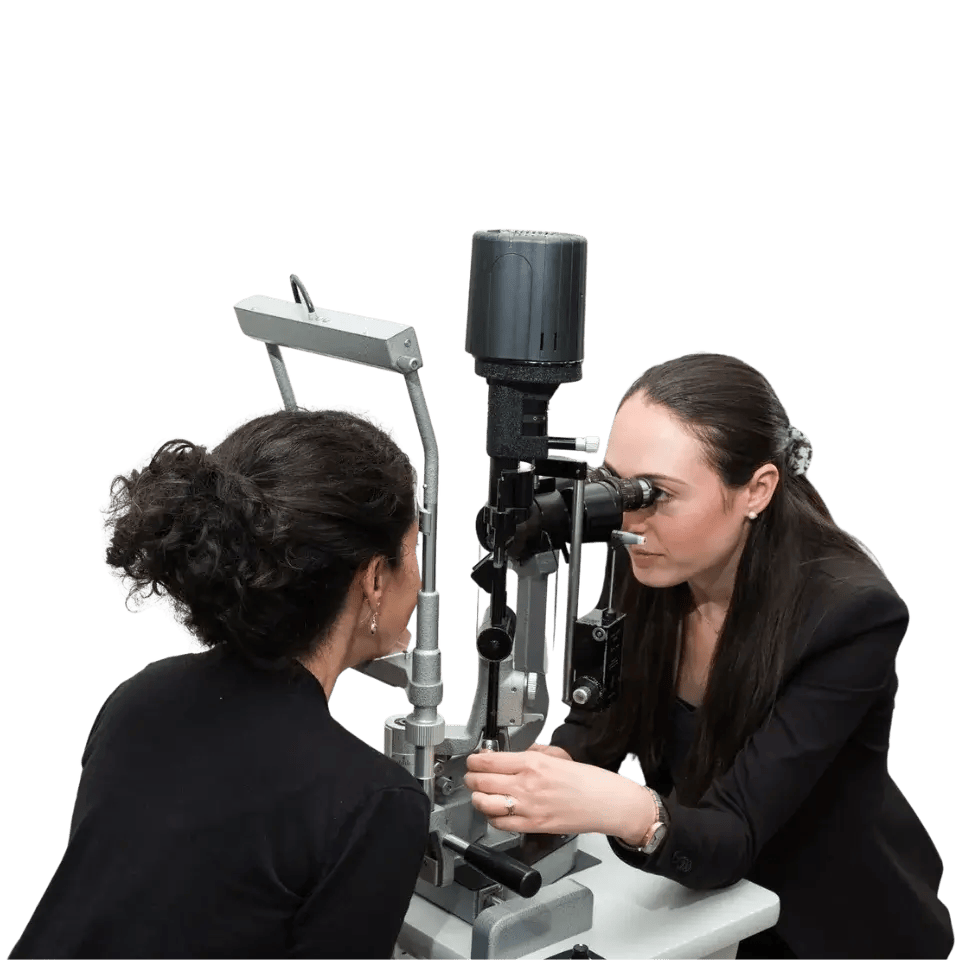
Your initial visit includes detailed corneal topography, scleral topography when available, and assessment of your tear film and ocular surface health. This diagnostic data guides the selection of your initial trial lens parameters.
We evaluate one or more trial lenses to assess vault height, landing zone alignment, and visual acuity. The fitting process typically requires two to four visits to achieve optimal comfort and vision.
Modern scleral lenses can be customized in numerous ways, including varying vault heights, landing zone angles, and optical zone designs. Multifocal scleral lenses are available for patients who need correction for both distance and near vision.
Frequently Asked Questions
Most patients find scleral lenses very comfortable once properly fitted. Because the lens rests on the less sensitive sclera and never touches the cornea, discomfort is minimal. The fluid reservoir also provides continuous lubrication throughout the day.
Scleral lenses require a specific insertion and removal technique. The lens is filled with saline and placed on the eye using a suction cup or large plunger device. Removal also uses a small suction device. Our team provides thorough training during your fitting visits.
With proper care, scleral lenses typically last one to two years before needing replacement. Regular follow-up visits ensure your lenses remain in good condition and your prescription stays current.
Most patients wear scleral lenses comfortably for 12-16 hours per day. Some patients with severe dry eye may need to remove and refill the lenses with fresh saline midway through the day. Following proper lens care practices is essential.
Many medical insurance plans provide coverage for scleral lenses when they are medically necessary. Documentation of your underlying condition helps support insurance claims. Our staff can assist with insurance questions.
Both hybrid lenses and scleral lenses can address irregular corneas. Hybrid lenses are smaller and may be preferred for milder conditions. Scleral lenses provide a larger fluid reservoir and are often better for severe dry eye or advanced keratoconus.
What our Patients say
 4.8
Reviews
(3926)